

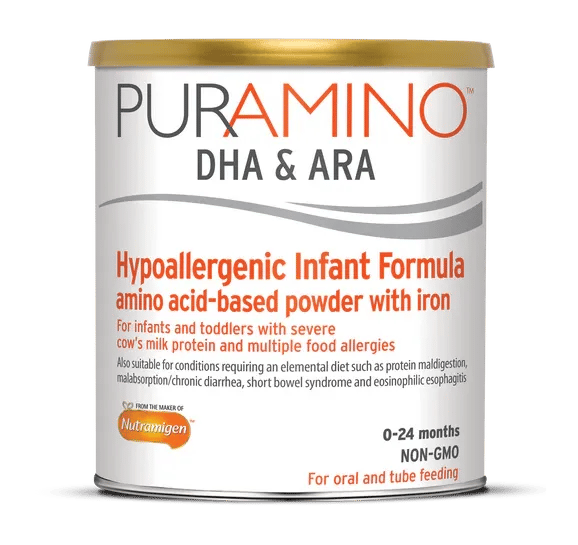


PurAmino™
Hypoallergenic amino acid-based formula for infants with severe cow’s milk protein allergy and multiple food allergies or elemental diet needs
PurAmino™ is a 20 cal/fl oz, iron-fortified, hypoallergenic, amino acid-based infant formula for the dietary management of infants with severe cow’s milk protein allergy, not effectively managed by an extensively hydrolyzed formula. PurAmino™ is also indicated for the dietary management of infants with multiple food protein allergies. It may also be suitable for conditions requiring an elemental diet, such as fat malabsorption, multiple food protein allergies, food protein-induced enterocolitis syndrome (FPIES), eosinophilic esophagitis (EoE),* and short bowel syndrome. Appropriate for both oral and tube feeding.
*EoE is the most common type of eosinophilic gastrointestinal disorders (EGID).
PurAmino™ provides relief and supports growth so infants can grow and thrive
- Demonstrated to support healthy weight gain and improvement in allergic manifestations in infants not responding to extensively hydrolyzed formulas
- Hypoallergenic, 100% free amino acids as nitrogen source:
- 100% of infants allergic to cow’s milk had no adverse reaction when fed PurAmino™1
- 2.8 g protein equivalent/100 cal
- 33% of fat as medium chain triglycerides (MCT) oil to help facilitate fat absorption
- Significant improvement in GI and skin symptoms by the next physician visit, when fed PurAmino™2† (see study below). Current guidelines recommend extensively hydrolyzed formula (eHF) as the first choice for CMPA, with amino acid formulas (AAF) for more severe cases or those not responding to eHF.
- Significantly reduced incidence and severity‡ of allergic symptoms at 12 weeks3
87% catch-up weight gain in 12 weeks3 (see study below)
Additional Product Features
- Nutritionally complete:
- Can be sole source of nutrition up to age 6 months
- Can be major source of nutrition through 24 months*
- Lactose-free
- Kosher Dairy (OU-D), Halal
- Expert-recommended DHA at 0.32% of total fatty acids, the same amount as the worldwide breastmilk average§
*PurAmino does not have fiber. Dietary reference intakes include a recommendation for fiber >12 months of age.
†Based on HCP reported user experience in infants with suspected CMPA.
‡15.8 GI Symptom Score improvement and reduced scoring atopic dermatitis (SCORAD).
§The World Health Organization recommended amount of DHA is 0.2%-0.36% of total fatty acids. Average DHA in worldwide breast milk is 0.32% ±0.22% (mean ± standard deviation of total fatty acids) based on an analysis of 65 studies of 2474 women.
Significant improvement in GI and skin symptoms by the next physician visit3
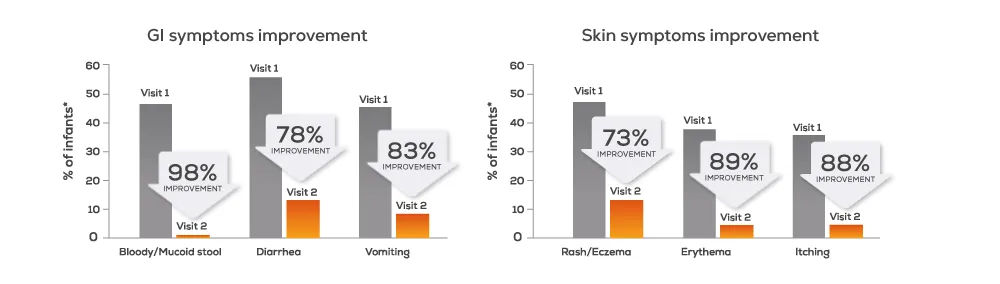
STUDY DESIGN (Wilsey et al. 2023 ↗ (opens in a new tab)): Prospective cohort analysis of de-identified patient data collected by HCPs who analyzed the clinical profile of infants displaying symptoms consistent with suspected CMPA or diagnosed CMPA. Inclusion criteria included patients less than 6 months of age prescribed an amino acid formula at the enrollment visit (Visit 1) whose HCPs provided symptom data at Visit 1 and the next visit (Visit 2) at 3 to 6 weeks (n = 104). Study suggests that AAF may be an effective option for CMPA management for infants 6 months of age and under with suspected CMPA, often by the next physician visit.
The percent improvement is calculated by determining the percent difference in the incidence of total presented symptoms (at different severity levels: low, moderate, and severe) between Visit 1 and Visit 2.
*Number of patients who presented with the reported symptoms at the first visit and were assessed at the second visit.
PurAmino™ promotes catch-up weight gain2*
In babies with faltering growth,† mean growth percentiles improved from 5th to 14th.2
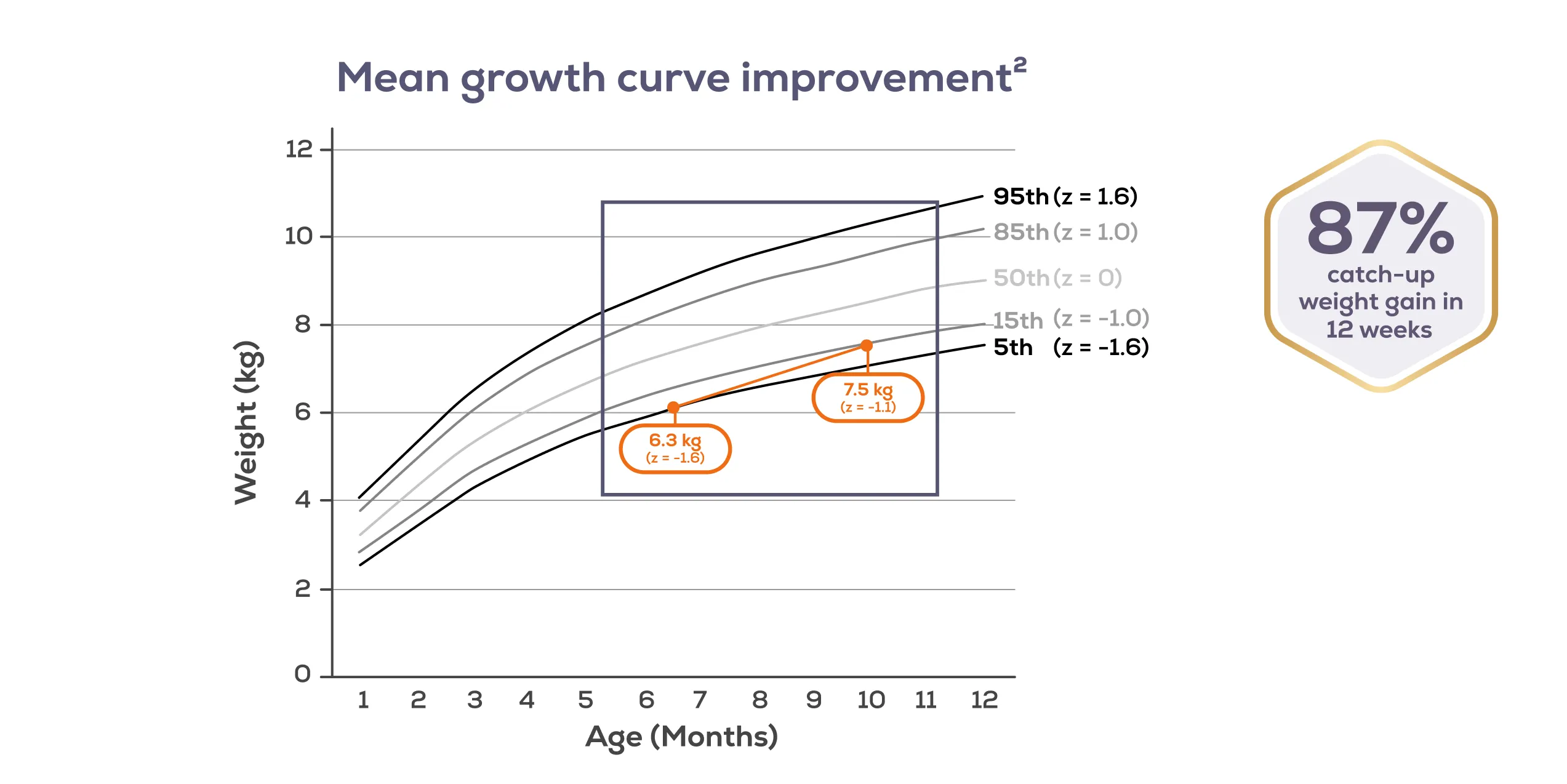
STUDY DESIGN (Vanderhoof et al. 2016 ↗): Observational, prospective, multicenter study of infants (n = 30; 1-12 months of age [mean age 6.6 months]) with a birth weight of ≥1500 g, suspected CMPA (experiencing at least one persistent CMPA symptom), and a history of weight loss (≥0.5 z score) who were not responding to an extensively hydrolyzed formula.
*-0.5 z score at baseline vs +0.433 z score at 12 weeks.
CMPA = cow's milk protein allergy
||0.5 z score weight loss when on extensively hydrolyzed formula for 2 weeks.
¶Infants who were fed PurAmino™.
PurAmino™ is designed to provide a sole source of nutrition for infants up to age 6 months and provide a major source of nutrition through 24 months of age, when indicated. Normally, in feeding infants, gradual introduction of solid foods after 4-6 months of age is an important developmental as well as nutritional step. In cases of severe and multiple food allergies or intolerances, PurAmino™ is sometimes continued in the diet of children.
Extended use of medical foods like PurAmino™ as a sole source of nutrition should be used with medical supervision.
PurAmino™ Recipe Book
To support the nutritional status of patients identified as having pediatric food allergies, Registered Dietitian and pediatric allergy expert Raquel Durban MS, RD, LD/N developed the recipes and nutrient profiles as a paid consultant to Mead Johnson Nutrition.
Ingredients: Corn syrup solids (46%), amino acids (potassium aspartate, L-leucine, L-lysine hydrochloride, L-proline, L-alanine, L-valine, L-isoleucine, L-serine, L-threonine, L-glutamine, L-tyrosine, L-aspartic acid, L-arginine, L-phenylalanine, L-histidine, L-cystine, glycine, L-tryptophan, L-methionine) (18%), high oleic sunflower oil (9%), medium chain triglycerides (MCT) oil (9%), soy oil (8%), modified tapioca starch (4%), and less than 2%: Mortierella alpina oil,|| Schizochytrium sp. oil,¶ choline chloride, inositol, ascorbic acid, niacinamide, calcium pantothenate, riboflavin, thiamin hydrochloride, vitamin B6 hydrochloride, vitamin D3, folic acid, vitamin K1, biotin, taurine, vitamin E acetate, L-carnitine, vitamin A palmitate, vitamin B12, calcium phosphate, potassium citrate, sodium citrate, magnesium phosphate, ferrous sulfate, zinc sulfate, cupric sulfate, manganese sulfate, sodium chloride, sodium iodide, sodium selenite.
||A source of arachidonic acid (ARA).
¶A source of docosahexaenoic acid (DHA).
Allergen Information
PurAmino™ contains soy oil. PurAmino™ is hypoallergenic.
WARNING: Not for parenteral (I.V.) use.
Ingredient Transparency
Explore the function behind our ingredients.
| Normal Dilution | Per 100 kcal (5 fl oz) | Per 100 mL | Per 100 grams Powder (500 kcal) |
|---|---|---|---|
| Protein equivalent, g | 2.8 | 1.9 | 14 |
| Fat, g | 5.3 | 3.6 | 27 |
| Carbohydrate, g | 10.6 | 7.2 | 53 |
| Water, g | 133 | 90 | 2.1 |
| Linoleic acid, mg | 860 | 580 | 4300 |
| Vitamins/Other Nutrients | |||
| Vitamin A, IU | 300 | 200 | 1500 |
| Vitamin D, IU | 60 | 41 | 300 |
| Vitamin E, IU | 2 | 1.36 | 10 |
| Vitamin K, mcg | 9 | 6.1 | 45 |
| Thiamin (Vitamin B1), mcg | 80 | 54 | 400 |
| Riboflavin (Vitamin B2), mcg | 90 | 61 | 450 |
| Vitamin B6, mcg | 60 | 41 | 300 |
| Vitamin B12, mcg | 0.3 | 0.2 | 1.5 |
| Niacin, mcg | 1000 | 680 | 5000 |
| Folic acid (Folacin), mcg | 16 | 10.9 | 80 |
| Pantothenic acid, mcg | 500 | 340 | 2500 |
| Biotin, mcg | 3 | 2 | 15 |
| Vitamin C (Ascorbic acid), mg | 12 | 8.2 | 60 |
| Choline, mg | 24 | 16.3 | 120 |
| Inositol, mg | 24 | 16.3 | 120 |
| Minerals | |||
| Calcium, mg | 116 | 79 | 580 |
| Phosphorus, mg | 64 | 44 | 320 |
| Magnesium, mg | 8 | 5.4 | 40 |
| Iron, mg | 1.8 | 1.22 | 9 |
| Zinc, mg | 1 | 0.68 | 5 |
| Manganese, mcg | 25 | 17 | 125 |
| Copper, mcg | 75 | 51 | 380 |
| Iodine, mcg | 15 | 10.2 | 75 |
| Selenium, mcg | 2.8 | 1.9 | 14 |
| Sodium, mg | 47 | 32 | 240 |
| Potassium, mg | 110 | 75 | 550 |
| Chloride, mg | 86 | 58 | 430 |
Product nutrient values and ingredients are subject to change. Please see product label for current information
| Nutrient Density | 20 kcal/fl oz |
|---|---|
| Protein (% Calories) | 11 |
| Fat (% Calories) | 46 |
| Carbohydrate (% Calories) | 43 |
| Potential Renal Solute Load (mOsm/100 kcal)8 | 25 |
| Potential Renal Solute Load (mOsm/100 mL)8 | 17.2 |
| Osmolality (mOsm/kg water) | 380 |
| Osmolarity (mOsm/L formula) | 340 |
| Lactose-free | Yes |
AMINO ACID COMPOSITION
Essential and Nonessential Amino Acids
DILUTION INFORMATION FOR PURAMINO™ INFANT
Mixing instruction by the scoop
Download tables ↗ (opens in a new tab)
Mixing instruction by the quart
Download tables ↗ (opens in a new tab)
POWDER
Refer to the product label for the most accurate information.
A baby’s health depends on carefully following the instructions below. Use only as directed by a medical professional. Proper hygiene, preparation, dilution, use, and storage are important when preparing infant formula. Powdered infant formulas are not sterile and should NOT be fed to premature infants or infants who might have immune problems unless directed and supervised by a doctor.
Discuss with parents which formula is appropriate for the baby.
Discuss with parents whether they need to use cooled, boiled water for mixing and whether they need to boil clean utensils, bottles and nipples in water before use.
Wash hands thoroughly with soap and water before preparing formula.Pour the desired amount of water into the bottle. Add powder. Cap bottle and SHAKE WELL.
Use the charts below for correct amounts of water and powder. Use scoop in can to measure powder. Store DRY scoop in its original can.
WARNING: Do not use a microwave oven to warm formula. Serious burns may result.
Failure to follow these instructions could result in severe harm. Once prepared, infant formula can spoil quickly. Either feed immediately or cover and store in refrigerator at 35-40 °F (2–4 °C) for no longer than 24 hours. Do not use prepared formula if it is unrefrigerated for more than a total of 2 hours. Do not freeze prepared formula. After feeding begins, use formula within 1 hour or discard.
For every 1 fl oz of water, add 1 unpacked level scoop of powder (4.5 g). Each scoop adds about 0.1 fl oz to the amount of prepared formula. For example, adding 3 unpacked level scoops of powder to 3 fl oz of water will make about 3.3 fl oz of formula.
| Water | Powder | |
|---|---|---|
| For every | 1 fl oz | add 1 unpacked level scoop (4.5 g) |
Per 1 Scoop*
| Calories Desired (kcal) | Add 1 scoop powder to water | Formula Yield | |
|---|---|---|---|
| per fl oz† | per mL | (fl oz) | Formula Yield |
| 20 | 0.68 | 1.0 | 1.1 |
| 22 | 0.74 | 0.9 | 1.0 |
| 24 | 0.81 | 0.8 | 0.9 |
| 26 | 0.88 | 0.7 | 0.9 |
| 27 | 0.91 | 0.7 | 0.8 |
| 28 | 0.95 | 0.7 | 0.8 |
| 30 | 1.01 | 0.6 | 0.8 |
PurAmino™ formula should be measured with unpacked, level scoops.
*One scoop of powder provides 23 calories.
†Fluid ounce measures in the above table are rounded to the nearest 0.1 fl oz.
Powder Storage
Store cans at room temperature. After opening can, keep tightly covered, store in dry area and use contents within 1 month. Do not freeze powder and avoid excessive heat.
USE BY DATE ON BOTTOM OF CAN.
PURAMINO™ IS AVAILABLE IN POWDER
Coding systems and reimbursement allowable rates vary by payer:
- Medicare Part B uses HCPCS (Healthcare Common Procedure Coding System) to group products
- Medicaid systems vary by state; some use HCPCS while others use NDC format code or systems of their own—contact your state provider for more information
- Private health insurance and managed care companies may use HCPCS, NDC format code or their own system—contact your provider for more information
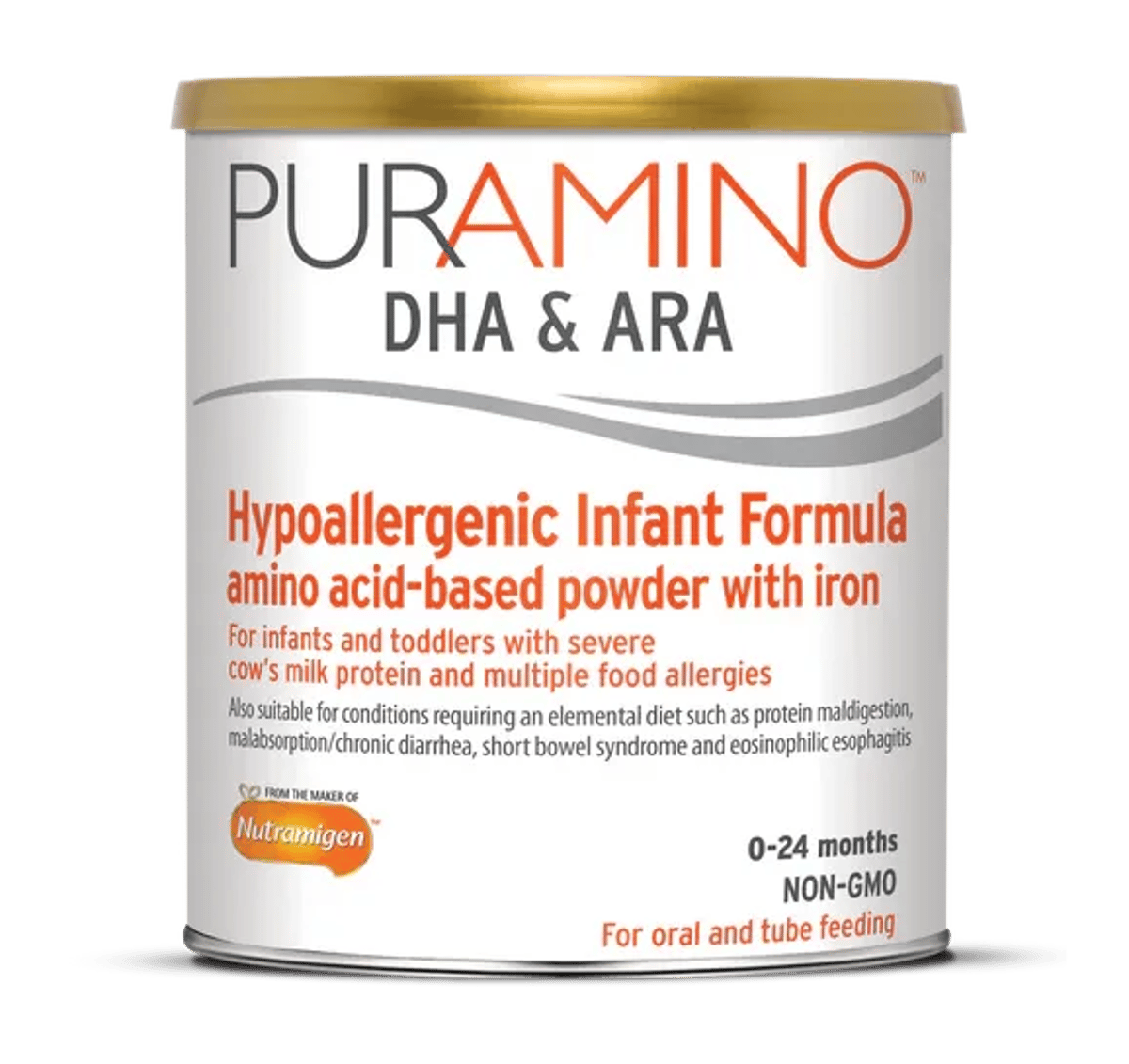
PurAmino™, Powder
Item #:
179101
Description:
Powder
Unit Size:
14.1 oz can
Calories/Unit:
1960
Product Yield/Unit (fl oz):
98
Case:
4 cans per case
HCPCS Code:
B4161
Reimbursement Code (NDC format):
00087-5104-80
PurAmino™ Jr Vanilla
Nutritionally complete*, hypoallergenic amino acid-based medical food to help support growth and development of children 1 year and up
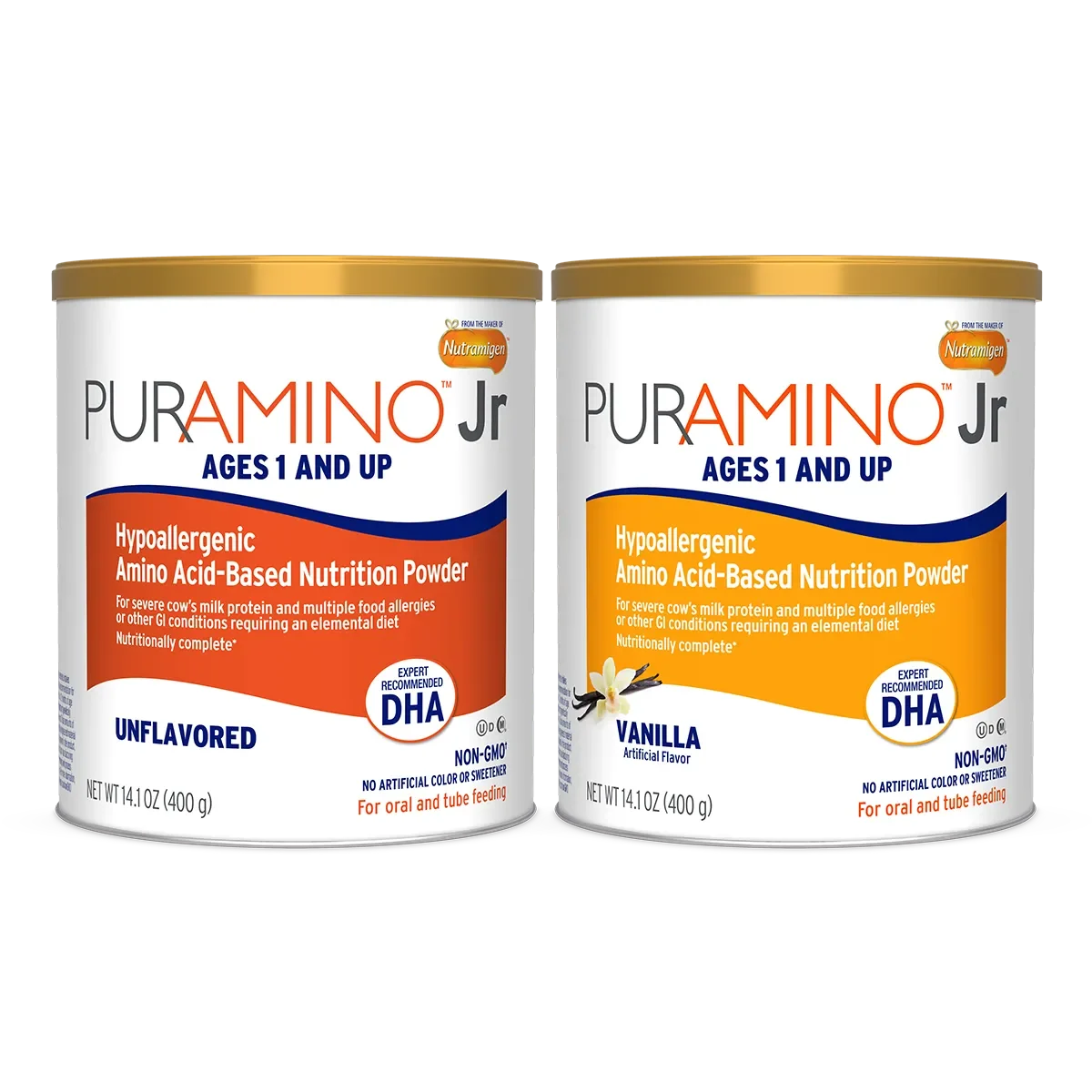
PurAmino™ Jr
Hypoallergenic, nutritionally complete*, amino-acid based powder for children ages 1+ who are experiencing severe cow’s milk protein allergy (CMPA), multiple food allergies, or other GI conditions requiring an amino acid formula. Available in both unflavored powder and vanilla powder.
In cases of severe and multiple food allergies or intolerances, PurAminoTM Jr is sometimes used long-term. Extended use of PurAminoTM Jr (or other medical foods for children) should be monitored by a healthcare professional.
Helping Hands Sample Assistance
FREE one-time shipment of PurAmino™ product, per child, per household
Learn more about Helping Hands Sample Assistance here.
Helping Hands Reimbursement Support
PurAmino™ may be eligible for Insurance coverage through Medicaid, Medi-Cal, TRICARE, and most commercial health Insurance plans when prescribed. We know that navigating insurance coverage is not always easy. Through Helping Hands" Reimbursement Support, our team of dedicated reimbursement experts can help guide parents through the process from start to finish. From benefits verification to prior authorization assistance, we handle all the details so patients can get quick access to Mead Johnson Nutrition products when prescribed.
While we can’t guarantee insurance reimbursement, our dedicated staff will help parents navigate the reimbursement process.
Learn more about helping Hands Reimbursement Support here.
PurAmino™ is WIC* eligible in 46 states:
Learn more about WIC* here.
*WIC is a registered trademark of the United States Department of Agriculture (USDA) for the Special Supplemental Nutrition Program for Women, Infants, and Children (WIC). No endorsement of any brand or product by the USDA is implied or intended.
Clinical Study
Hypoallergenicity, growth, and tolerance with amino acid-based formula and DHA.
PurAmino™ Letter of Medical Necessity
Letters of medical necessity are available to help make accessing the Mead Johnson formula you recommend easier for your patients. Use this form for patients prescribed PurAmino™ or PurAmino™ Jr.
PurAmino™ Infant formula is WIC®*-eligible in 46 states
Empower families to manage food allergies
Understand the key facts, considerations, and hypoallergenic solutions for cow’s milk allergy.

Contact Mead Johnson
Contact a Mead Johnson representative to request information.
*WIC® is a registered service mark of the US Department of Agriculture for USDA’s Special Supplemental Nutrition Program for Women, Infants, and Children. No endorsement of any brand or product by the USDA is implied or intended. PurAmino™ Infant is WIC®-eligible in 46 states. It is not approved in Alaska, New York, Washington, or Wisconsin.
- Burks W, Jones SM, Berseth CL, Harris C, Sampson HA, Scalabrin SMF. Hypoallergenicity and effects on growth and tolerance of a new amino acid-based formula with docosahexaenoic acid and arachidonic acid. J Pediatr. 2008;253(2):66-271.
- Wilsey MJ, Baran JV, Lamos L, et al. Short-term symptom improvement in infants with suspected cow’s milk protein allergy using a prospective cohort analysis. Front Nutr. 2023;10:1208334.
- Vanderhoof J, Moore N, de Boissieu D. Evaluation of an amino acid-based formula in infants not responding to extensively hydrolyzed protein formula. J Pediatr Gastroenterol Nutr. 2016;63(5):531-533.
- Weight-for-age. World Health Organization. Accessed January 7, 2025. https://www.who.int/tools/child-growth-standards/standards/weight-for-age (opens in a new tab)↗