

.svg?branch=production&width=1200&quality=85&auto=webp)

.svg?branch=production&width=1200&quality=85&auto=webp)
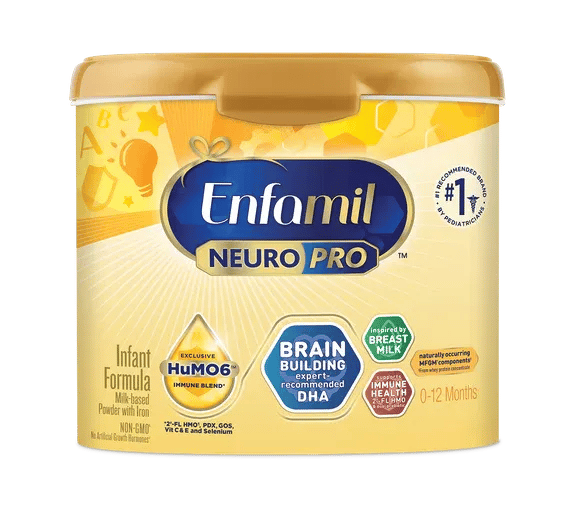
Enfamil® NeuroPro™ Infant
Infant formula brand that has expert-recommended brain-building DHA, naturally occurring MFGM components* and a proprietary HuMO6™† immune blend including PDX, GOS, and 2′-FL HMO‡
Enfamil NeuroPro Infant is a 20 Cal/fl oz milk-based, iron-fortified, routine formula for full-term infants 0–12 months that is inspired by mature breast milk. Enfamil NeuroPro Infant has brain-building, expert recommended DHA§ as well as naturally occurring MFGM components* and is the only brand with a proprietary blend of GOS and PDX as well as 2’-FL HMO‡.
*From whey protein concentrate.
†2’-FL HMO,PDX, GOS, Vit C & E, Selenium.
‡2’-Fucosyllactose Human Milk Oligosaccharide. Not from human milk.
§World Health Organization recommended amount of DHA is 0.2%-0.36% of total fatty acids. Enfamil has 0.32% of total fatty acids as DHA, similar to the average amount found in world-wide mature breast milk.
DHA has been demonstrated in clinical studies to:
- Support cognitive and visual development1-4*
- Promote long-term cognitive outcomes through 5 years of age4*
Brain Building naturally occurring MFGM components demonstrated in clinical studies to:
- Provide cognitive development similar to breastfed babies at 12 months of age5
- Increase neurodevelopmental scores at 12 months of age6†
- Support cognitive, motor and communications skills through 5 years of age4,6,7‡
A proprietary HuMO6™§ immune blend including GOS, PDX and 2’-FL HMO designed to support a baby’s immune health:
- Infant formula with a combination of GOS and PDX has been shown to support immune health by promoting the growth of beneficial bacteria (bifidobacteria and lactobacilli)8-9
- Infant formula with a combination of GOS and PDX has been shown to promote soft stools similar to those reported for breastfed infants10
- Infant formula with a combination of GOS and 2’-FL HMO is associated with a 66% reduction in respiratory infections, based on a parental report in a post-hoc analysis.11
Additional product features:
- Easy-to-digest 65:35 whey-to-casein ratio patterned after mature breast milk12||
- Inositol as found in breast milk¶
- Non-GMO#
- Kosher Dairy (OU-D), Halal
*Studies compared infants fed Enfamil® that had DHA and ARA vs. discontinued Enfamil without DHA and ARA; studied before the addition of prebiotics.
†As indicated by Bayley-III cognitive, language and motor scores at 12 months in a study of a different formula with MFGM and lactoferrin added as ingredients compared to a standard formula without.
‡Cognitive skills as indicated by WPPSI-IV, tested at 5.5 to 6 years of age in a study of infant formula with MFGM. Communication skills as indicated by PPVT-III and WPPSI-III tested at 5 and 6 years of age respectively in a study of infant formula with DHA. Motor skills measured through 12 months of age.
§2’-FL HMO, PDX, GOS, Vit C & E, Selenium.
||Comparison based on whey:casein ratio of typical mature breast milk (15 days to 6 months after birth)12.
¶The global average total inositol amount in mature breast milk over the course of lactation is 22 mg/100 kcal.
#Ingredients not genetically engineered. Trace amounts of genetically engineered material may be presented in the product, such as from manufacturing environments and process sources. For more information, visit enfamil.com/nonGMO ↗
Ingredients: Powder: Nonfat milk, lactose, vegetable oil (palm olein, soy, coconut, and high oleic sunflower oils), whey protein concentrate*, and less than 2%: 2' -Fucosyllactose†, galactooligosaccharides‡, polydextrose‡, Mortierella alpina oil §, Schizochytrium sp. oil ||, calcium carbonate, calcium phosphate, cupric sulfate, ferrous sulfate, magnesium oxide, manganese sulfate, potassium chloride, potassium citrate, potassium iodide, sodium chloride, sodium selenite, zinc sulfate, soy lecithin, choline chloride, inositol, ascorbic acid, biotin, calcium pantothenate, folic acid, niacinamide, riboflavin, thiamin hydrochloride, vitamin B12, vitamin B6, hydrochloride, vitamin D3, vitamin K1, vitamin E acetate, vitamin A palmitate, taurine, L-carnitine.
Ingredients: Ready To Use (2 & 6 fl oz Nursette® bottles and 8 & 32 fl oz RTU bottles): Water, nonfat milk, lactose, vegetable oil (palm olein, soy, coconut, and high oleic sunflower oils), and less than 2%: 2' -Fucosyllactose†, whey protein concentrate*, galactooligosaccharides‡, polydextrose‡, Mortierella alpina oil §, Schizochytrium sp. oil ||, potassium citrate, calcium carbonate, calcium chloride, magnesium phosphate, sodium chloride, calcium phosphate, ferrous sulfate, zinc sulfate, cupric sulfate, manganese sulfate, sodium selenite, potassium iodide, mono-and diglycerides, soy lecithin, ascorbic acid, sodium ascorbate, vitamin E acetate, niacinamide, calcium pantothenate, vitamin A palmitate, thiamin hydrochloride, riboflavin, vitamin B6 hydrochloride, folic acid, vitamin K1, biotin, vitamin B12, carrageenan, choline chloride, inositol, vitamin D3, taurine, L-carnitine.
Potential Allergens:
Enfamil® NeuroPro® Infant contains milk and soy.
*A source of MFGM (milk fat globule membrane composed of proteins and fats) components.
†A source of 2’-FL HMO (2’-fucosyllactose human milk oligosaccharide).
‡A type of prebiotic.
§A source of arachidonic acid (ARA).
||A source of docosahexaenoic acid (DHA).
Ingredient Transparency
| Nutrients (Normal Dilution) | Per 100 Cal (5 fl oz) | Per 100 mL | Per Quart | Per 100 g Powder |
|---|---|---|---|---|
| Calories | 100 | 68 | 640 | 510 |
| Protein, g (% of total Cal) | 2.1 (8.6%) | 1.42 | 13.4 | 10.7 |
| Fat, g (% of total Cal) | 5.3 (48%) | 3.6 | 34 | 27 |
| Carbohydrate, g (% of total Cal) | 11.3 (43%) | 7.6 | 72 | 58 |
| Water, g | 133 | 90 | 850 | 2.6 |
| Linoleic Acid, mg | 780 | 530 | 5000 | 4000 |
| Linolenic Acid, mg (not declared on label) | 72 | 49 | 460 | 370 |
| Arachidonic Acid, mg (not declared on label) | 25 | 16.9 | 160 | 128 |
| Docosahexaenoic Acid, mg (not declared on label) | 17 | 11.5 | 109 | 87 |
| Vitamin A, IU | 300 | 200 | 1920 | 1530 |
| Vitamin D, IU | 70 | 47 | 450 | 350 |
| Vitamin E, IU | 2 | 1.35 | 12.8 | 10.2 |
| Vitamin K, mcg | 9 | 6.1 | 58 | 46 |
| Thiamin (Vitamin B1), mcg | 80 | 54 | 510 | 410 |
| Riboflavin (Vitamin B2), mcg | 140 | 95 | 900 | 710 |
| Vitamin B6, mcg | 60 | 41 | 380 | 310 |
| Vitamin B12, mcg | 0.3 | 0.2 | 1.92 | 1.53 |
| Niacin, mcg | 1000 | 680 | 6400 | 5100 |
| Folic Acid (Folacin), mcg | 16 | 10.8 | 102 | 82 |
| Pantothenic Acid, mcg | 500 | 340 | 3200 | 2600 |
| Biotin, mcg | 3 | 2 | 19.2 | 15.3 |
| Vitamin C (Ascorbic acid), mg | 12 | 8.1 | 77 | 61 |
| Choline, mg | 24 | 16.2 | 154 | 122 |
| Inositol, mg | 24 | 16.2 | 154 | 122 |
| L-Carnitine, mg (not declared on label) | 2 | 1.35 | 12.8 | 10.2 |
| Taurine, mg (not declared on label) | 6 | 4.1 | 38 | 31 |
| Calcium, mg | 78 | 53 | 500 | 400 |
| Phosphorus, mg | 43 | 29 | 280 | 220 |
| Magnesium, mg | 8 | 5.4 | 51 | 41 |
| Iron, mg | 1.8 | 1.22 | 11.5 | 9.2 |
| Zinc, mg | 1 | 0.68 | 6.4 | 5.1 |
| Manganese, mcg | 15 | 10.1 | 96 | 77 |
| Copper, mcg | 75 | 51 | 480 | 380 |
| Iodine, mcg | 15 | 10.1 | 96 | 77 |
| Selenium, mcg | 2.8 | 1.89 | 17.9 | 14.3 |
| Sodium, mg (mEq) | 27 (1.17) | 18.3 (0.79) | 173 (7.5) | 138 (6) |
| Potassium, mg (mEq) | 108 (2.8) | 73 (1.87) | 690 (17.7) | 550 (14.1) |
| Chloride, mg (mEq) | 63 (1.77) | 43 (1.2) | 400 (11.4) | 320 (9.1) |
Source of Protein: Skim milk and whey protein concentrate
Source of Fat: Palm olein, soy, coconut, high oleic sunflower oils, and single cell oil blend of DHA and ARA
Source of Carbohydrate: Lactose, GOS, PDX
Product nutrient values and ingredients are subject to change. Please see product label for current information.
Nutrient Facts
| Nutrient Density | 20 Calories/fl oz Powder | 20 Calories/fl oz RTU |
|---|---|---|
| Protein (% Calories) | 9 | 8 |
| Whey:Casein Ratio | 65:35 | 65:35 |
| Fat (% Calories) | 48 | 48 |
| Carbohydrate (% Calories) | 43 | 44 |
| Potential Renal Solute Load (mOsm/100 Calories)1 | 19.1 | 19.1 |
| Potential Renal Solute Load (mOsm/100 mL)1 | 12.9 | 12.9 |
| Osmolality (mOsm/kg water) | 300 | 300 |
| Osmolarity (mOsm/L) | 270 | 270 |
| Lactose-free | No | No |
1.Fomon SJ, Ziegler EE. Renal solute load and potential renal solute load in infancy. J Pediatr. 1999;134:11-14.
Amino Acid Composition:
Powder: Essential and Nonessential Amino Acids
Ready-to-Use: Essential and Nonessential Amino Acids
Mixing instructions by the scoop
Download dilution information ↗
Mixing instructions by the quart
Download dilution information ↗
Powder
A baby’s health depends on carefully following the instructions below. Use only as directed by a medical professional. Proper hygiene, preparation, dilution, use, and storage are important when preparing infant formula. Powdered infant formulas are not sterile and should NOT be fed to premature infants or infants who might have immune problems unless directed and supervised by a doctor.
Discuss with parents which formula is appropriate for the baby.
Discuss with parents whether they need to use cooled, boiled water for mixing and whether they need to boil clean utensils, bottles, and nipples in water before use.
WARNING: Do not use a microwave oven to warm formula. Serious burns may result.
Refer to the product label for the most accurate information.
Failure to follow these instructions could result in severe harm. Once prepared, infant formula can spoil quickly. Either feed immediately or cover and store in refrigerator at 35–40°F (2–4°C) for no longer than 24 hours. Do not use prepared formula if it is unrefrigerated for more than a total of 2 hours. Do not freeze prepared formula. After feeding begins, use formula within 1 hour or discard.
- Wash hands thoroughly with soap and water before preparing formula.
- Pour the desired amount of water into the bottle. Add powder.
- Cap bottle and SHAKE WELL.
Use the following chart for correct amounts of water and powder.
| To Make* | Water | Powder | Weight |
|---|---|---|---|
| 2 fl oz bottle | 2 fl oz | 1 unpacked level scoop | 8.8 g |
| 4 fl oz bottle | 4 fl oz | 2 unpacked level scoops | 17.6 g |
| 8 fl oz bottle | 8 fl oz | 4 unpacked level scoops | 35.2 g |
*Each scoop adds about 0.2 fl oz to the amount of prepared formula.
Powder Storage
Tubs
Store powder at room temperature; avoid extreme temperatures. After opening, keep lid tightly closed, store in a dry area and use contents within 1 month. Use tub with formula indicated on label only.
Keep powder fresh and prevent bacterial growth by assuring tub is clean and completely dry. Completely empty tub and wipe clean with a clean, dry cloth before refilling. If you choose to empty the pouch into the tub, you must retain the batch code and “use by” date sticker from the pouch.
Caution
- USE BY DATE ON LABEL OF CURRENT POUCH
Cans
Store cans at room temperature. After opening can, keep tightly covered, store in dry area and use contents within 1 month. Do not freeze powder and avoid excessive heat.
Caution
- USE BY DATE ON BOTTOM OF CAN
Single Serve Packets
Failure to follow these instructions could result in severe harm. Once prepared, infant formula can spoil quickly. Either feed immediately or cover and store in refrigerator at 35–40°F (2–4°C) for no longer than 24 hours. Do not use prepared formula if it is unrefrigerated for more than a total of 2 hours. Do not freeze prepared formula. After feeding begins, use formula within 1 hour or discard.
- Wash hands thoroughly with soap and water before preparing formula.
- Pour desired amount of water into bottle. Pour entire contents of packet(s) into bottle.
- Cap bottle and SHAKE WELL.
WARNING: Do not use a microwave oven to warm formula. Serious burns may result.
Use the chart below for correct amounts of water and powder
| To Make* | Water | Powder | Weight |
|---|---|---|---|
| 4 fl oz bottle | 4 fl oz | 1 packet | 17.6 g |
| 8 fl oz bottle | 8 fl oz | 2 packets | 35.2 g |
*Each packet adds about 0.4 fl oz to the amount of prepared formula.
Single Serve Packet Storage
Store unopened packets at room temperature. Do not freeze powder and avoid excessive heat.
Caution
- USE BY DATE ON PACKET
Ready to Use
A baby’s health depends on carefully following the instructions below. Use as directed by a medical professional. Proper hygiene, preparation, use, and storage are important when preparing infant formula. Discuss with parents which formula is appropriate for the baby. Discuss with parents whether they need to boil a clean nipple in water before use.
2 & 6 FL OZ Nursette® Bottles
- Inspect each bottle for signs of damage.
- Wash hands thoroughly with soap and water before preparing bottle for feeding.
- SHAKE BOTTLE WELL and remove cap.
- Attach nipple unit (not included).
WARNING: Do not use a microwave oven to warm formula. Serious burns may result.
Failure to follow these instructions could result in severe harm.
Opened bottles can spoil quickly. Either feed immediately or replace cap and store in refrigerator at 35–40°F (2–4°C) for no longer than 24 hours. Do not use opened bottle if it is unrefrigerated for more than a total of 2 hours. Do not freeze. After feeding begins, use formula within 1 hour or discard.
8 FL OZ Bottles
- Inspect each bottle for signs of damage.
- Wash hands thoroughly with soap and water before preparing bottle for feeding.
- SHAKE BOTTLE WELL and remove cap.
- Attach nipple unit (not included).
WARNING: Do not use a microwave oven to warm formula. Serious burns may result.
Failure to follow these instructions could result in severe harm.
Opened bottles can spoil quickly. Either feed immediately or replace cap and store in refrigerator at 35–40°F (2–4°C) for no longer than 24 hours. Do not use opened bottle if it is unrefrigerated for more than a total of 2 hours. Do not freeze. After feeding begins, use formula within 1 hour or discard.
32 FL OZ Bottles
- Wash hands thoroughly with soap and water before preparing feeding bottles.
- SHAKE BOTTLE WELL, remove protective seal around cap, remove cap and foil seal. Replace cap.
- Pour into feeding bottle(s).
WARNING: Do not use a microwave oven to warm formula. Serious burns may result.
Failure to follow these instructions could result in severe harm.
Opened bottles and prepared formula can spoil quickly. Either feed immediately or cover and store in refrigerator at 35–40°F (2–4°C) for no longer than 48 hours. Do not use opened bottle and/or prepared formula if they are unrefrigerated for more than a total of 2 hours. Do not freeze prepared formula. After feeding begins, use prepared formula within 1 hour or discard.
Ready to Use Storage
2 & 6 fl oz Nursette® Bottles
Store unopened bottles at room temperature. Avoid excessive heat and prolonged exposure to light. Do not freeze.
Caution
- DO NOT ACCEPT IF PACKAGE HAS BEEN OPENED
- DO NOT USE IF CAP RING IS BROKEN OR MISSING
- USE BY DATE ON CARTON AND BOTTLE LABEL
8 & 32 fl oz Bottles
Store unopened bottles at room temperature. Avoid excessive heat. Do not freeze.
Caution
- DO NOT ACCEPT IF PACKAGE HAS BEEN OPENED
- DO NOT USE IF PROTECTIVE SEAL AROUND CAP, OR IF FOIL SEAL UNDER CAP IS DAMAGED OR MISSING
- USE BY DATE ON SIDE OF BOTTLE
Enfamil Neuropro Infant is available in the following powder and ready-to-feed liquid formulations.
Coding systems and reimbursement allowable rates vary by payer:
- Medicare Part B uses HCPCS (Healthcare Common Procedure Coding System) to group products
- Medicaid systems vary by state; some use HCPCS while others use NDC format code or systems of their own—contact your state provider for more information
- Private health insurance and managed care companies may use HCPCS, NDC format code or their own system—contact your provider for more information
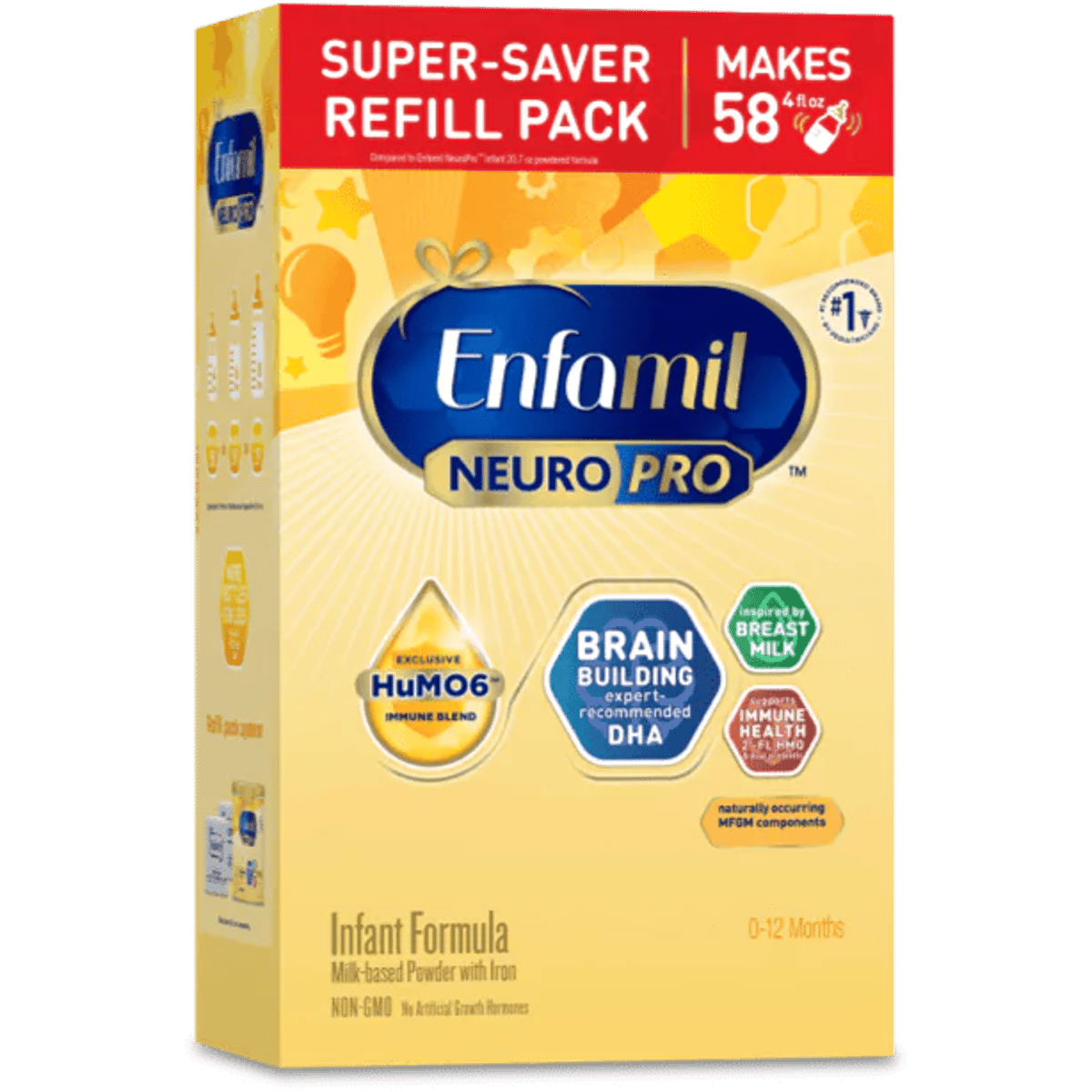
Enfamil® NeuroPro® Infant, Powder Refill
Item #:
472504
Description:
Powder, Refill
Unit Size:
31.4 oz box
Calories/Unit:
4500
Product Yield/Unit (fl oz):
225
Case:
4 boxes per case
HCPCS Code:
B4158
Reimbursement Code (NDC format):
00087-5121-11
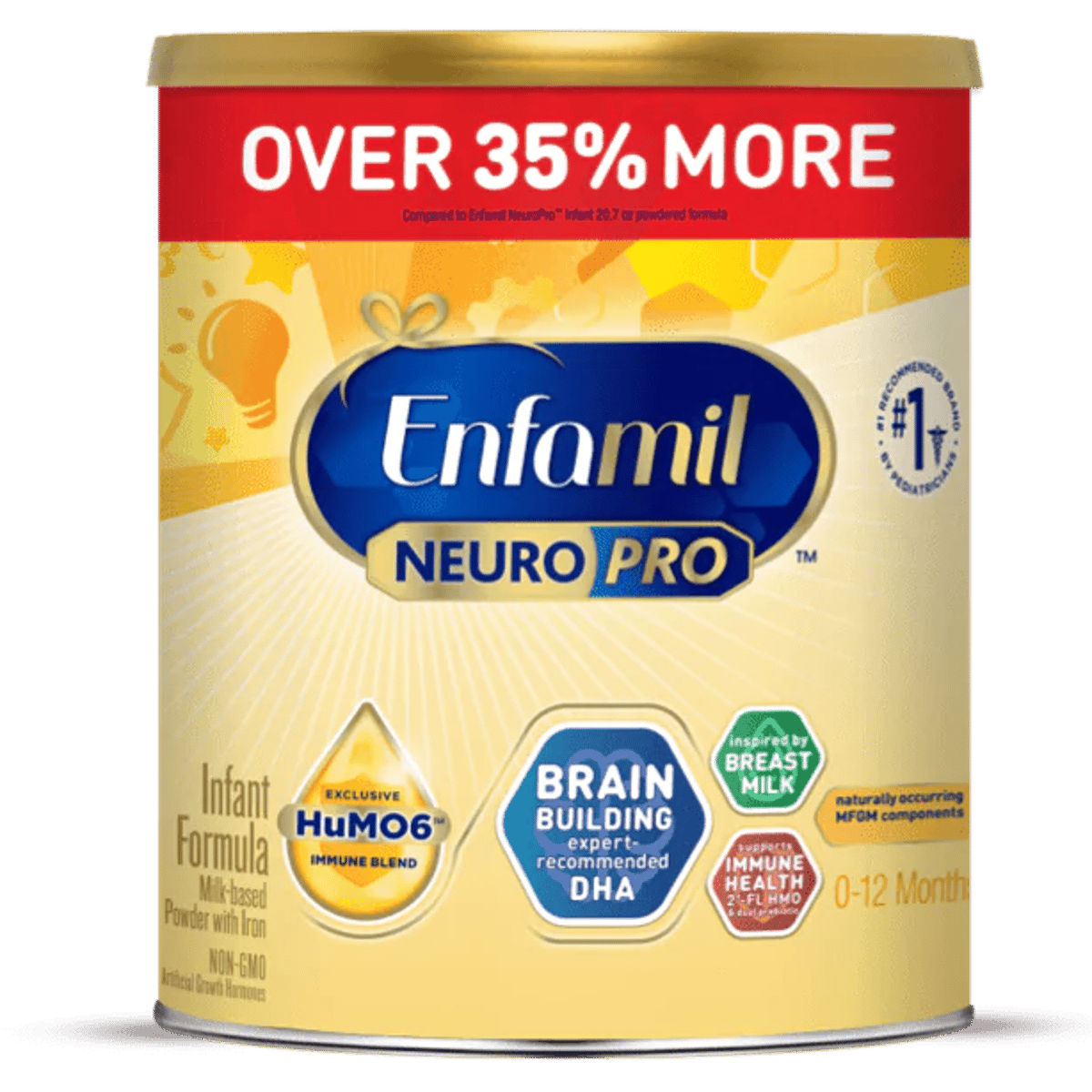
Enfamil® NeuroPro® Infant, Powder (28.3 oz can)
Item #:
472502
Description:
Powder
Unit Size:
28.3 oz can
Calories/Unit:
4040
Product Yield/Unit (fl oz):
202
Case:
4 cans per case
HCPCS Code:
B4158
Reimbursement Code (NDC format):
00087-5121-09
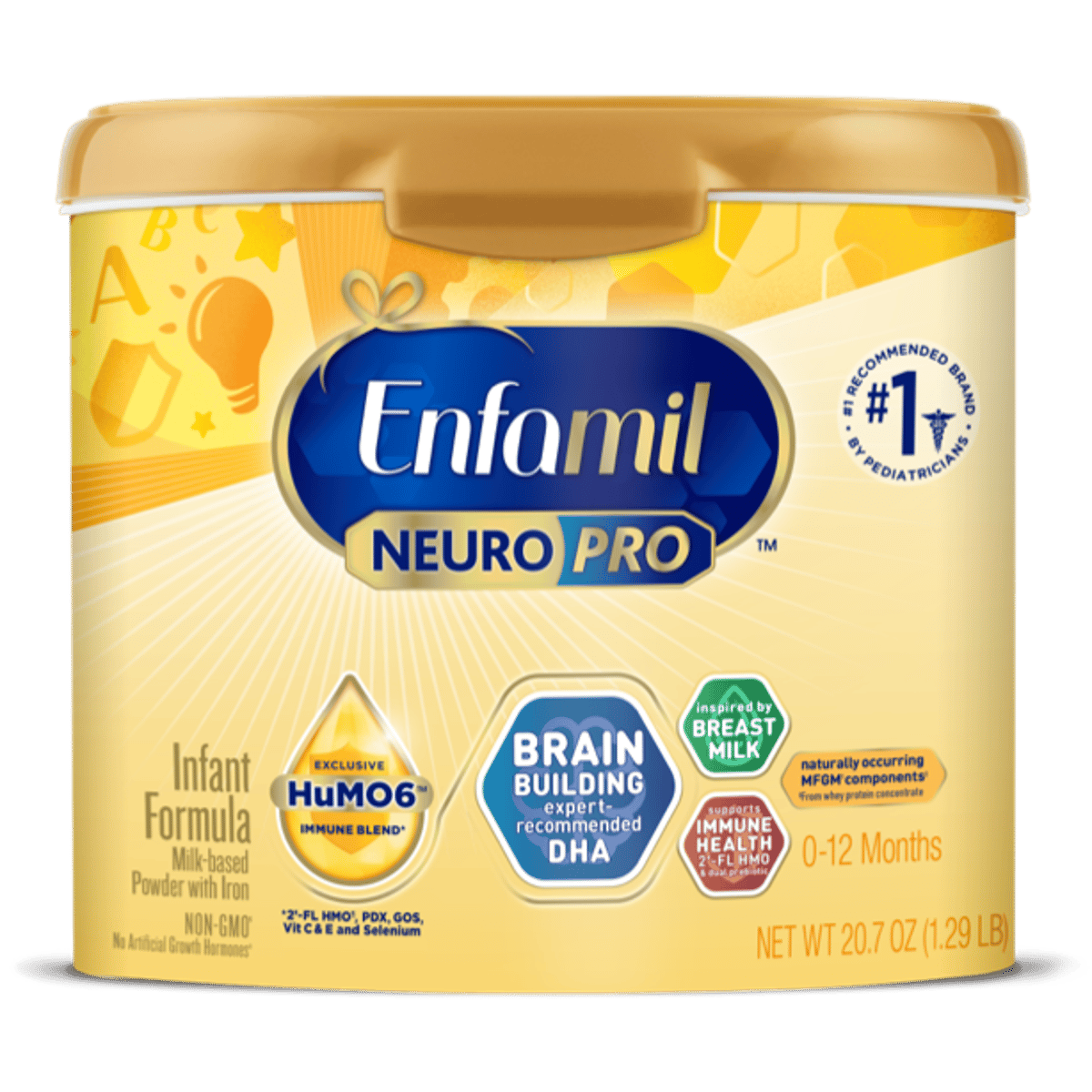
Enfamil® NeuroPro® Infant, Powder (20.7 oz tub)
Item #:
472505
Description:
Powder
Unit Size:
20.7 oz tub
Calories/Unit:
2960
Product Yield/Unit (fl oz):
148
Case:
4 cartons per case
HCPCS Code:
B4158
Reimbursement Code (NDC format):
00087-5121-07
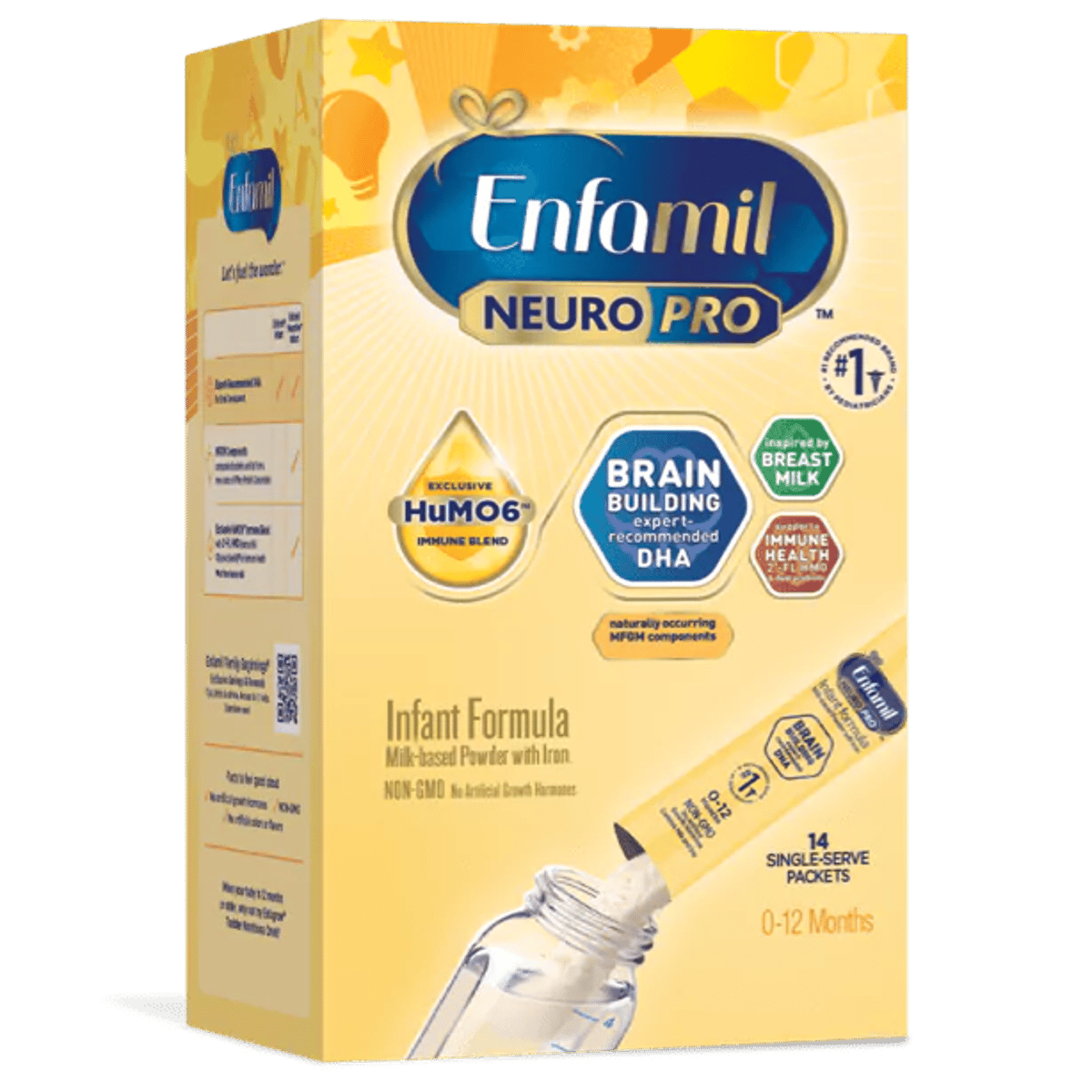
Enfamil® NeuroPro® Infant, Single-Serve Powder Packets
Item #:
472503
Description:
Single-Serve Powder Packets
Unit Size:
17.6 g stick packs (14 per carton)
Calories/Unit:
1120
Product Yield/Unit (fl oz):
56
Case:
4 cartons per case
HCPCS Code:
B4158
Reimbursement Code (NDC format):
00087-5121-03
Enfamil® NeuroPro® Infant, Ready-to-Feed (2 fl oz Nursette® bottle)
Item #:
171601
Description:
RTF
Unit Size:
2 fl oz bottle
Calories/Unit:
40
Product Yield/Unit (fl oz):
2
Case:
48 bottles per case
HCPCS Code:
B4158
Reimbursement Code (NDC format):
00087-5121-29
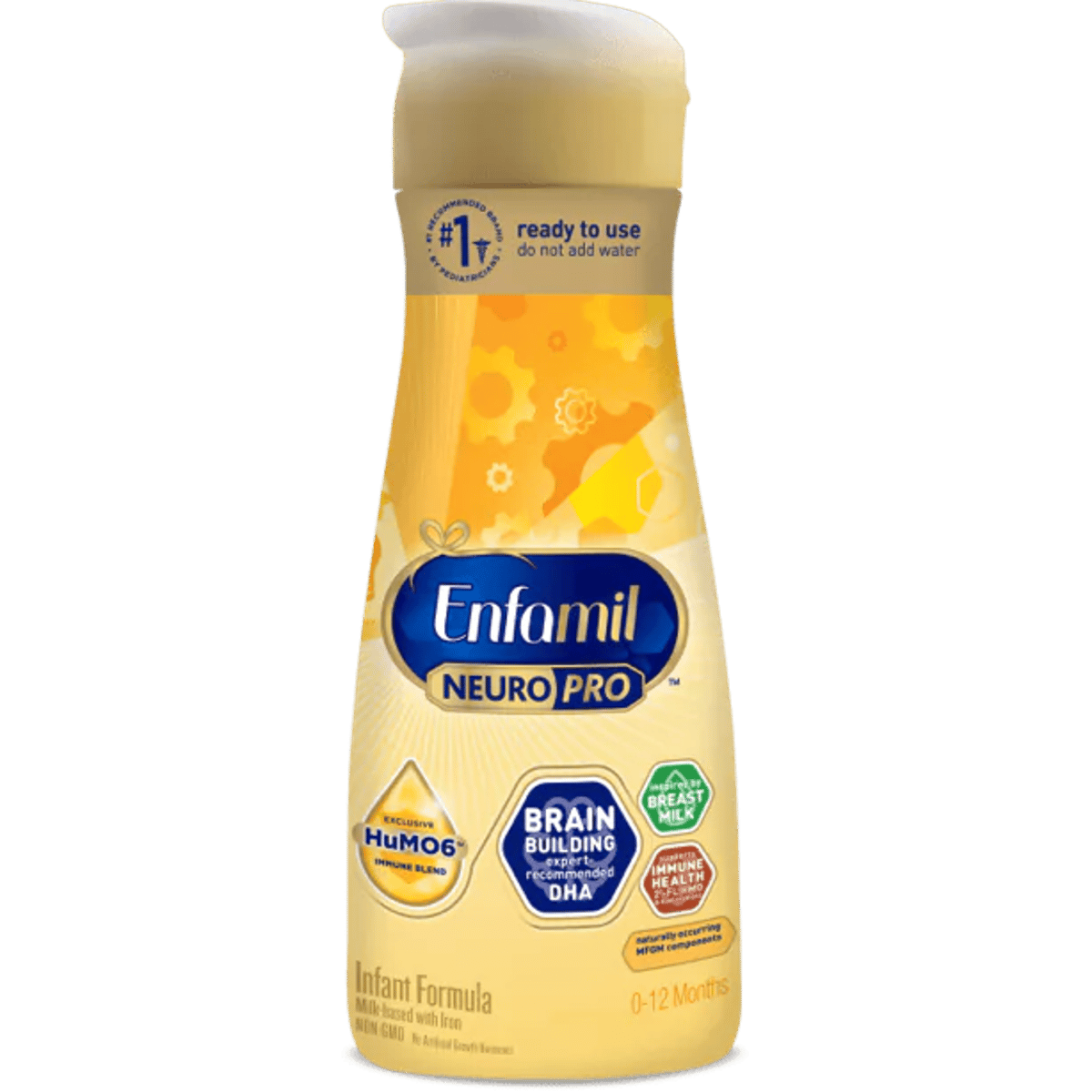
Enfamil® NeuroPro® Infant, Ready-to-Feed (32 fl oz bottle)
Item #:
187002
Description:
RTF
Unit Size:
32 fl oz bottle
Calories/Unit:
640
Product Yield/Unit (fl oz):
32
Case:
6 bottles per case
HCPCS Code:
B4158
Reimbursement Code (NDC format):
00087-5121-41
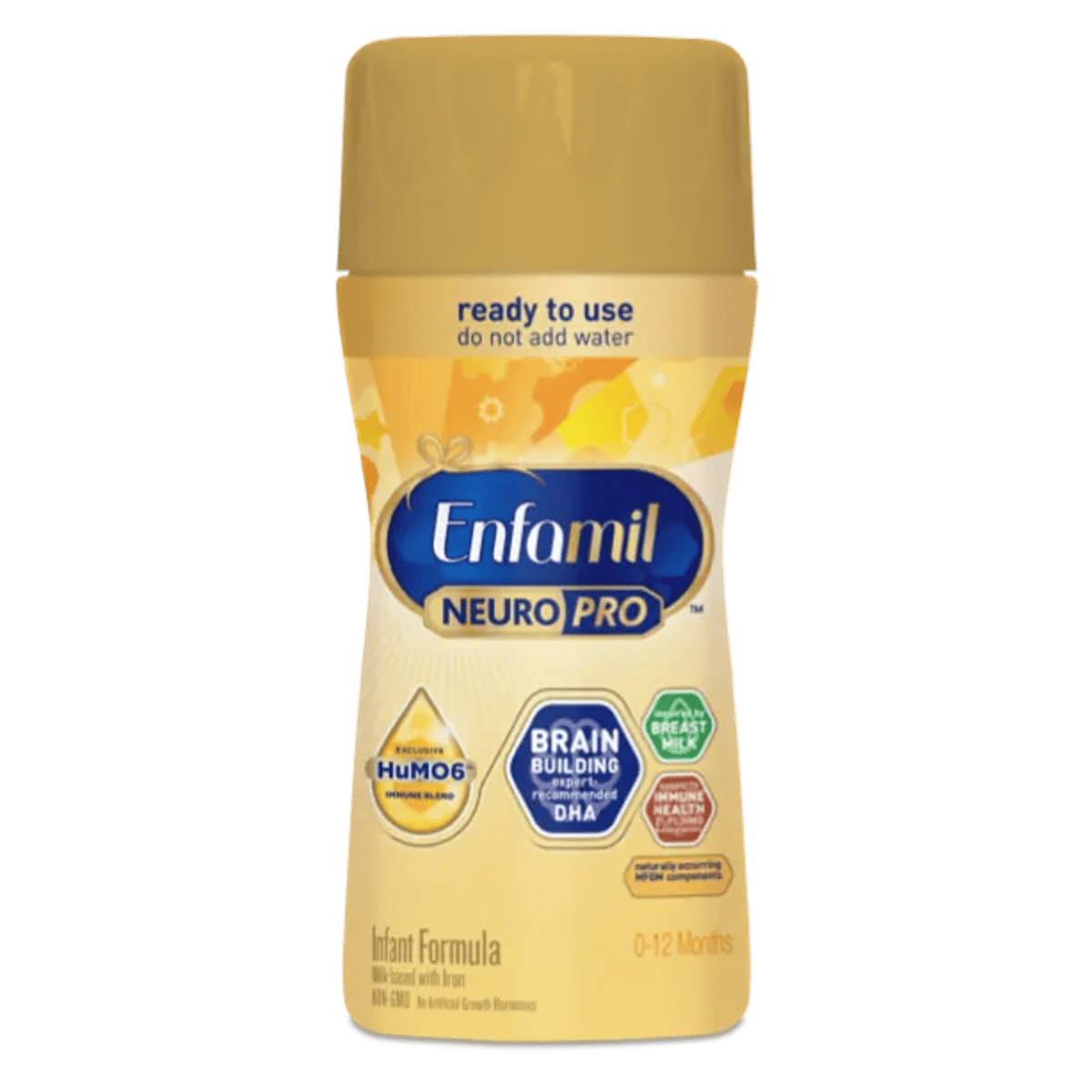
Enfamil® NeuroPro® Infant, Ready-to-Feed (8 fl oz bottle)
Item #:
187001
Description:
8 fl oz bottles/carton
Unit Size:
8 fl oz
Calories/Unit:
160
Product Yield/Unit (fl oz):
8
Case:
4 cartons per case
HCPCS Code:
B4158
Reimbursement Code (NDC format):
00087-5102-42
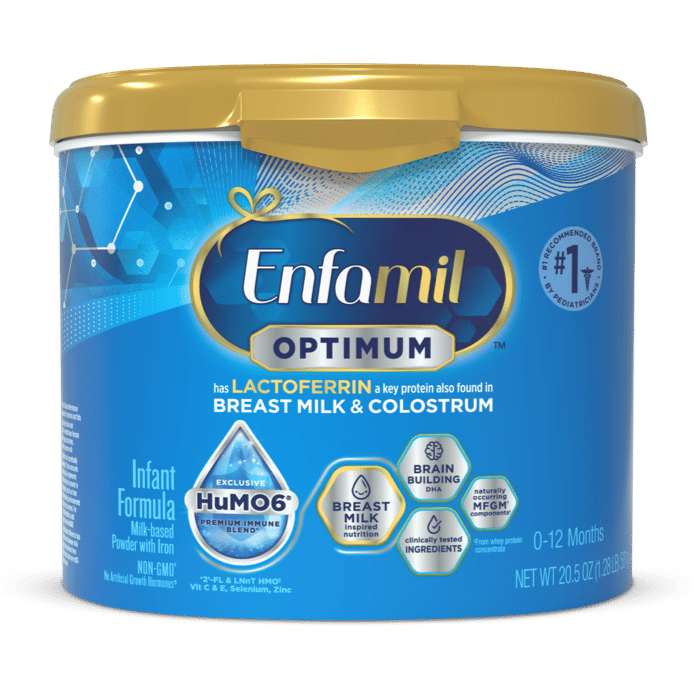
Enfamil® Optimum™
Our closest ever formula to breast milk. It is the only leading brand with lactoferrin*, a component of breast milk, and has our exclusive HuMO6 Premium Immune Blend† that includes Dual HMOs (2'FL & LNnT).
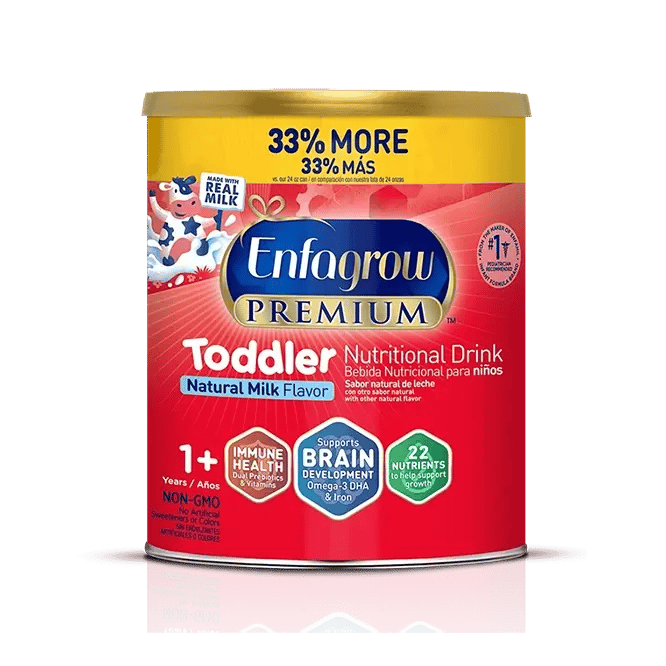
Enfagrow® PREMIUM Toddler Nutritional Drink
Clinical study
Long-term effects of LCPUFA supplementation on childhood cognitive outcomes
Clinical study
Clinical study
Developmental effects on sleep–wake patterns in infants receiving a cow’s milk-based infant formula with an added prebiotic blend: a Randomized Controlled Trial
Clinical study
Clinical study
Review of the clinical experiences of feeding infants formula containing the human milk oligosaccharide 2’-fucosyllactose.
Clinical study
Neurodevelopment, nutrition, and growth until 12 mo of age in infants fed a low-energy, low-protein formula supplemented with bovine milk fat globule membranes: a randomized controlled trial
Clinical study
Improved Neurodevelopmental Outcomes Associated with Bovine Milk Fat Globule Membrane and Lactoferrin in Infant Formula: A Randomized, Controlled Trial
Enfamil® NeuroPro® Infant Is Women, Infant, and Children (WIC®) Program* Eligible in Some States
WIC-exempt formulas are provided based on HCP determination, regardless of the state’s contract for routine products.
Savings and Support Programs to Share with Parents
Mead Johnson offers a range of programs to help parents save on formula for their infants and toddlers
*WIC is a registered trademark of the United States Department of Agriculture (USDA) for the Women, Infants, and Children Program. No endorsement of any brand or product by the USDA is implied or intended.
- Birch EE, Hoffman DR, Uauy R, et al. Visual acuity and the essentiality of docosahexaenoic acid and arachidonic acid in the diet of term infants. Pediatr Res. 1998;44:201-209.
- Birch EE, Garfield S, Hoffman DR, et al. A randomized controlled trial of early dietary supply of long-chain polyunsaturated fatty acids and mental development in term infants. Dev Med Child Neurol. 2000;42:174-181.
- Morale SE, Hoffman DR, Castaneda YS, et al. Duration of long-chain polyunsaturated fatty acids availability in the diet and visual acuity. Early Hum Dev. 2005;81:197-203.
- Colombo J, Carlson SE, Cheatham CL, et al. Long-term effects of LCPUFA supplementation on childhood cognitive outcomes. Am J Clin Nutr. 2013;98:403-412.
- Timby N, Domellöf E, Hernell O, Lönnerdal B, Domellöf M. Neurodevelopment, nutrition, and growth until 12 mo of age in infants fed a low-energy, low-protein formula supplemented with bovine milk fat globule membranes: a randomized controlled trial. Am J Clin Nutr. 2014;99(4):860-868.
- Li F, Wu SS, Berseth CL, et al. Improved Neurodevelopmental Outcomes Associated with Bovine Milk Fat Globule Membrane and Lactoferrin in Infant Formula: A Randomized, Controlled Trial. J Pediatr. 2019;215:24-31.e8.
- Colombo J, Harris CL, Wampler JL, et al. Improved Neurodevelopmental Outcomes at 5.5 Years of Age in Children Who Received Bovine Milk Fat Globule Membrane and Lactoferrin in Infant Formula Through 12 Months: A Randomized Controlled Trial [published online ahead of print, 2023 May 14]. J Pediatr. 2023;261:113483. doi:10.1016/j.jpeds.2023.113483
- Scalabrin D, Mitmesser SH, Welling GW, et al. New prebiotic blend of polydextrose and galacto-oligosaccharides has a bifidogenic effect in young infants. J Pediatr Gastroenterol Nutr. 2012;54:343-352.
- Salminen S, Endo A, Isolauri E, et al. Early gut colonization with lactobacilli and staphylococcus in infants: the hygiene hypothesis extended. J Pediatr Gastroenterol Nutr. 2016;62:80-86.
- Ziegler E, Vanderhoof JA, Petschow B, et al. Term infants fed formula supplemented with selected blends of prebiotics grow normally and have soft stools similar to those reported for breast-fed infants. J Pediatr Gastroenterol Nutr. 2007;44:359-364.
- Reverri EJ, Devitt AA, Kajzer JA, Baggs GE, Borschel MW. Review of the clinical experiences of feeding infants formula containing the human milk oligosaccharide 2’-fucosyllactose. Nutrients. 2018;10(10):1346
- Kunz C, Lönnerdal B. Re-evaluation of the whey protein/casein ratio of human milk.